Plant Stress Signaling
Research Interests
This is a new group, set up at the IGC in October 2008.
We are ultimately interested in signaling processes that operate ubiquitously in Nature, such as those related to the nutrient and energy status, and in how they have been modified to the needs of autotrophic and multi-cellular plants.
In contrast to animals, plant growth is largely conditioned by environmental inputs. Such plasticity allows the plant to optimise its growth and development according to the prevailing conditions, ensuring the best possible chance to complete its life cycle and contributing to the striking phenotypic variation of the plant kingdom. Stress can have a great impact on growth, on developmental transitions, as well as on the characteristics of newly formed organs. Often associated with stress is a reduction in photosynthesis and/or respiration, which in turn results in an energy deficit in the cell. Dealing with such imbalances in the energy status is of uttermost importance, since even short periods of starvation can cause growth arrest and result, for example, in seed abortion characteristic of episodes of drought and heat.
![]()
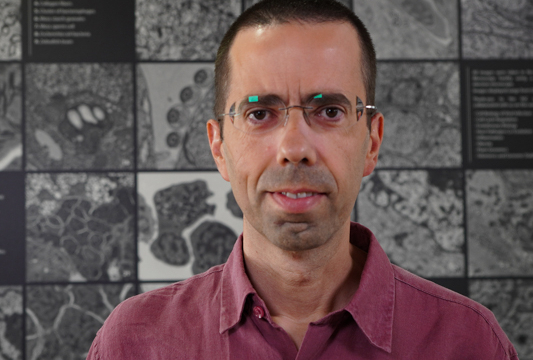
Elena Baena González
Ph.D. in Plant Physiology and Molecular Biology
University of Turku, Finland
Group Members
Research Project
Energy signaling in the stress response
Despite their distinct origin and mode of perception, different stresses trigger largely similar downstream responses that include overlapping patterns of gene expression. Our work has shown that this general stress transcriptome is partly regulated by the evolutionarily conserved energy sensor protein kinases, SNF1 (sucrose non-fermenting1) in yeast, SnRK1 (Snf1-related kinase1) in plants, and AMPK (AMP-activated protein kinase) in mammals. Upon sensing the energy deficit associated with stress, SnRK1 triggers extensive transcriptional changes that contribute to restoring metabolic and energy homeostasis, promoting cell survival and allowing the elaboration of longer-term responses for adaptation. Most importantly, long-term defective SnRK1 signaling results in developmental alterations, suggesting that these protein kinases serve as integration points of metabolic, hormonal and environmental signals.
Our goal is to gain insight on how growth and developmental decisions are made based on environmental inputs and to understand the role of SnRK1 as a mediator of these processes. At present, virtually nothing is known regarding the mode of operation of the uncovered signaling pathway. Using Arabidopsis thaliana as a model and a combination of cell-based assays, functional genomics, bioinformatics, mutant screens and genetics, we aim to: i) elucidate the regulatory mechanisms that govern SnRK1 action, ii) dissect further this signaling pathway through the identification of novel components, iii) investigate its connection to other nutrient sensing pathways in the plant.
Funding
Energy signaling in the stress response
Marie Curie International Reintegration Grant - PIRG03-GA-2008-231020
Fundação para a Ciência e a Tecnologia (FCT) Project Grants, Portugal
EMBO Installation Grant, European Molecular Biology Organization (EMBO)
Collaborators
Massachusetts General Hospital, Harvard Medical School, Boston, USA
Jen Sheen
Publications
(Selected) Update January (2010).
Baena González, E (2010). Energy signaling in the regulation of gene expression during stress. Mol Plant (In Press)
Baena González, E and Sheen, J (2008). Convergent energy and stress signaling Trends Plant Sci 13 :474-482
Baena González, E, Rolland F, Thevelein J, and Sheen J (2007). A central integrator of transcription networks in plant stress and energy signaling Nature 448 :938-942
Rolland F, Baena González, E, and Sheen J (2006). Sugar Sensing and Signaling in Plants: Conserved and Novel Mechanisms Annu Rev Plant Biol 57
Baena González, E, Svab Z, Maliga P, Josse E-M, Kuntz M, Mäenpää P, and Aro E-M (2003). Alternative plastoquinone reducing pathways maintain electron flow in thylakoids under conditions of Photosystem II inactivation Plant J 35 :704-716
Baena González, E, and Aro E-M (2002). Biogenesis, assembly and turnover of photosystem II units Philos Trans R Soc Lond B Biol Sci 357 :1451-1459
Baena González, E, Baginsky S, Mulo P, Summer H, Aro E-M, Link G (2001). Chloroplast transcription at different light intensities: Glutathione-mediated phosphorylation of the major RNA polymerase involved in redox-regulated organellar gene expression Plant Physiol 127 :1044-10452
Baena González, E, Gray JC, Tyystjärvi E, Aro E-M, Mäenpää P (2001). Abnormal regulation of photosynthetic electron transport in a chloroplast ycf9 inactivation mutant J Biol Chem 276 :20795-20802
Mäenpää P, Baena González, E, Li C, Khan MS, Gray JC, Aro, E-M (2000). The ycf9 (orf62gene) in the plant chloroplast genome encodes a hydrophobic protein of stromal thylakoid membranes J Exp Bot 51 :375-382
Baena González, E, Barbato R, Aro E-M (1999). Role of PSII phosphorylation in the PSII repair cycle and oligomeric structure. Planta 208 :196-204
Pursiheimo S, Rintamäki E, Baena González, E, Aro E-M (1998). Thylakoid protein phosphorylation in evolutionarily divergent species with oxygenic photosynthesis. FEBS Lett 423 :178-182