Epigenetic Mechanisms
Research Interests
This group was set up at the IGC in April 2008.
During human development a single zygote differentiates into approximately 200 different cell types that, despite being genetically identical, maintain their cellular identity through mitotic divisions. Therefore, in addition to the genomic information embedded in the primary DNA sequence, epigenetic information is propagated as well, that “memorizes” gene activity states and specific chromatin structures across somatic division and sometimes even across generations.
Epigenetic inheritance forms the basis for many aspects of biology that includes development, gene regulation and disease. Several molecular components such as histone proteins and modifications thereof have been implicated in this process but in most cases we don’t understand the logic of how something other than DNA can be faithfully duplicated when a cell divides. We have a broad interest in how this works. We are using molecular genetic and cell biological tools with a focus on novel fluorescent labeling techniques, high-end microscopy and the latest tricks in genetic engineering of human cells to tackle a wide range of problems in this emerging and fascinating area of biology.
![]()
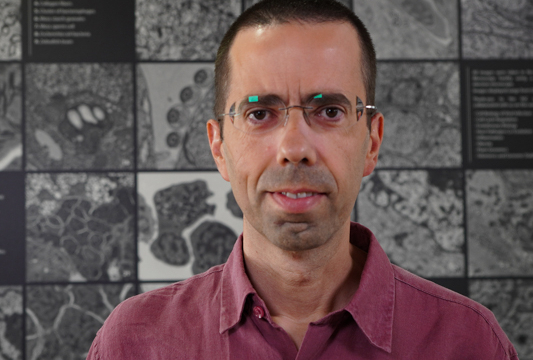
Lars Jansen
Ph.D. in Molecular Genetics
University of Leiden, Leiden
Group Members
Research Project
Determining the epigenetic mechanism of centromere propagation
Each chromosome features a unique locus, the centromere, that is responsible for tethering chromosomes to microtubules and executing chromosome segregation during mitosis. Defects in centromere function lead to missegregation of chromosomes that is lethal in early development and contributes directly to tumorigenesis in somatic tissues. The centromere is unique in that it is maintained in an epigenetic manner through the propagation of a specialized chromatin structure. Strikingly, the centromere appears to represent the most stable form of epigenetic inheritance known to date as it is maintained not only through mitotic divisions but also through the germ line.
What do we do?
We focus our efforts on a unique histone variant, centromere protein A (CENP-A) that is specifically incorporated into centromeric chromatin and is critical in maintaining centromere identity and function. It is remarkable that this histone, although vastly outnumbered by its canonical counterpart histone H3, is specifically recruited to centromeric chromatin and is stably maintained there. How is the centromere structure reestablished following chromosome duplication? What are the activities that are responsible for maintaining CENP-A chromatin? What is the role, if any, of centromeric DNA? How do the lessons learned from centromere biology apply to other epigenetic components that maintain chromatin elsewhere?
Funding
European Commission Marie Curie International Reintegration
EMBO Installation Grant
Crioestaminal award 2009
Fundação para a Ciência e a Tecnologia (FCT) Project Grants
BIA/BCM-100557-2008
BIA/PRO-100537-2008
Publications
(Selected) Updated January (2012).
Lars E.T. Jansen (2012). Sowing the seeds of centromeres Science 335 :299-300
Mariana C.C. Silva, Dani L. Bodor, Madison E. Stellfox, Nuno M.C. Martins, Helfrid Hochegger, Daniel R. Foltz and Lars E.T. Jansen (2012). Cdk activity couples epigenetic centromere inheritance to cell cycle progression Developmental Cell 22 :52-63
Dominique Ray Gallet, Adam Woolfe, Isabelle Vassias, Céline Pellentz, Nicolas Lacoste, Aastha Puri, David C. Schultz, Nikolay A. Pchelintsev, Peter D. Adams, Lars E.T. Jansen and Geneviève Almouzni (2011). Dynamics of histone H3 deposition in vivo reveal a gap filling mechanism for H3.3 to maintain chromatin integrity Molecular Cell 44 :928-41
Ben E. Black, Lars E.T. Jansen, Daniel R. Foltz and Don W. Cleveland (2011). Centromere Identity, Function, and Epigenetic Propagation across Cell Divisions Cold Spring Harb Symp Quant Biol 2010.75.038
Jan H. Bergmann, Mariluz Gómez Rodríguez, Nuno M. C. Martins, Hiroshi Kimura, David A. Kelly, Hiroshi Masumoto, Vladimir Larionov, Lars E. T. Jansen and William C Earnshaw. (2011). Epigenetic engineering shows H3K4me2 is required for HJURP targeting and CENP-A assembly on a synthetic human kinetochore EMBO J. 30 :328-40
Alexander Samoshkin, Alexei Arnaoutov, Lars E. T. Jansen, Ilia Ouspenski, Louis Dye, Tatiana Karpova, James McNally, Mary Dasso, Don W. Cleveland and Alexander Strunnikov (2009). Human condensin function is essential for centromeric chromatin assembly and proper sister kinetochore orientation. PLoS One 4 :e6831
Mariana C.C. Silva and Jansen, Lars E.T. (2009). At the right place at the right time: Novel CENP-A binding proteins shed light on centromere assembly Chromosoma 118 :567–74
Christopher W. Carroll, Mariana C.C. Silva, Kristina M. Godek, Jansen, Lars E.T. and Aaron F. Straight (2009). Centromere assembly requires the direct recognition of CENP-A nucleosomes by CENP-N. Nature Cell Biol 11 :896-902
Foltz, Daniel R., Jansen, Lars E.T., Aaron O. Bailey, John R. Yates III, Emily A. Bassett, Stacey Wood, Ben E. Black and Don W. Cleveland (2009). Centromere-Specific Assembly of CENP-A Nucleosomes Is Mediated by HJURP Cell 137 :472–84
Jansen, Lars E.T., Ben E. Black, Daniel R. Foltz, and Don W. Cleveland (2007). Propagation of centromeric chromatin requires exit from mitosis J Cell Biol 176 :795-805
Ben E. Black*, Jansen, Lars E.T.*, Paul S. Maddox, Daniel R. Foltz, Arshad B. Desai, Jagesh V. Shah and Don W. Cleveland *equal contributors (2007). Centromere Identity Maintained by Nucleosomes Assembled with Histone H3 Containing the CENP-A Targeting Domain. Mol Cell. 25 :309-22
Foltz, DR, Jansen, Lars E.T., Ben E. Black, Aaron O. Bailey, John R. Yates III and Don W. Cleveland (2006). The human CENP-A centromeric nucleosome-associated complex Nat Cell Biol. 8 :458-69
Kobayashi, M, Francis Figaroa, Nico Meeuwenoord, Jansen, Lars E. T. and Gregg Siegal (2006). Characterization of the DNA binding and structural properties of the BRCT region of human replication factor C p140 subunit J Biol Chem. 281 :4308-17
Robert C. A. M. van Waardenburg, Laurina A. de Jong, Maria A. J. van Eijndhoven, Caroline Verseyden, Dick Pluim, Jansen, Lars E. T., Mary-Ann Bjornsti, and Jan H. M. Schellens (2004). Platinated DNA Adducts Enhance Poisoning of DNA Topoisomerase I by Camptothecin J. Biol. Chem. 279 :54502-9
Jansen, Lars E.T., Ana I. Belo, Rinske Hulsker and Jaap Brouwer (2002). Transcription elongation factor Spt4 mediates loss of phosphorylated RNA polymerase II transcription in response to DNA damage Nucleic Acids Res. 30 :3532-9
Woudstra, EC, Chris Gilbert, Jane Fellows, Jansen, LET, Jaap Brouwer, Hediye Erdjument-Bromage, Paul Tempst and Jesper Q. Svejstrup (2002). A Rad26-Def1 complex co-ordinates repair and RNA polymerase II proteolysis in response to DNA damage Nature 415 :929-33
Jansen, Lars E.T., Hans den Dulk, Rosalba M. Brouns, Martina de Ruijter, Jourica A. Brandsma and Jaap Brouwer (2000). Spt4 modulates Rad26 requirement in transcription-coupled nucleotide excision repair. EMBO J. 19 :6498-507
Vergunst, AC, Jansen, LET, Paul F. Fransz, J. Hans de Jong and Paul J.J. Hooykaas (2000). Cre/lox-mediated recombination in Arabidopsis: evidence for transmission of a translocation and a deletion event Chromosoma 109 :287-97
Jansen, LET, Richard A. Verhage and Jaap Brouwer (1998). Preferential binding of yeast Rad4-Rad23 complex to damaged DNA J Biol Chem 273 :33111-4
Vergunst, AC, Jansen, LET, and Paul J. Hooykaas (1998). Site-specific integration of Agrobacterium T-DNA in Arabidopsis thaliana mediated by Cre recombinase Nucleic Acids Res. 26 :2729-34