English | Português

Telomeros e Estabilidade Genómica

Interesse da Investigação

It is estimated that one in three people will be diagnosed with cancer during their lifetime (source: CancerStats, CRUK). The strongest risk factor for cancer is age, with 75% of cases diagnosed in people aged 60 and over. Population aging in the developed world represents an ever increasing burden to our health system. However, emergent therapies have improved ability to fight cancer. This has come substantially from our ever increasing knowledge of the causes underlying tumorigenesis. Our challenge now lies in understanding the molecular mechanisms responsible for aging in order to identify new ways of reducing the lifetime risk for cancer (and remaining age-associated diseases) leading to a prolonged healthier life. Our goal is to investigate the mechanisms underlying chromosome-end protection and the outcomes of its failure, not only at the cellular level but also at the organism level. Our work will allow the discovery of key regulators guarding cells from genomic instability. Identification of these entities will provide new targets for cancer therapy along with tools for early diagnosis. Ultimately, we aim at preventing of the incidence of cancer associated with aging. We plan to achieve this by identifying and manipulating the agents responsible for its increase.

We are looking for motivated people to join our lab!
Look for opportunities on our Website
.

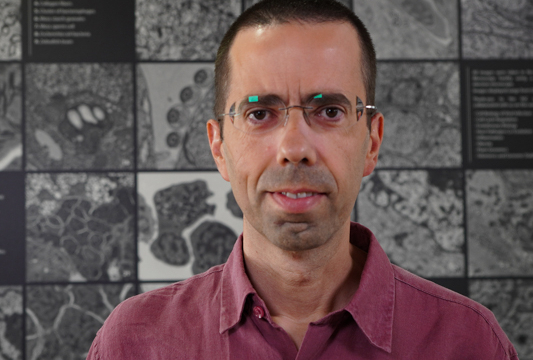
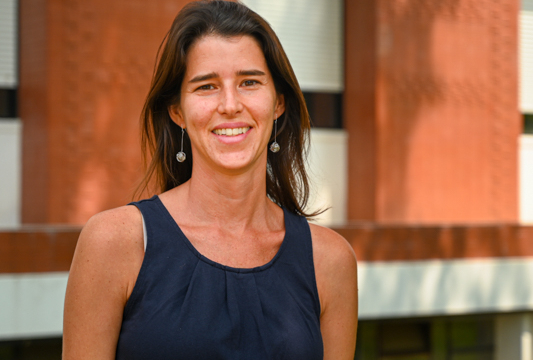
Miguel Ferreira

Ph.D. in Cell Biology

University College London, London


Investigador Principal
Telefone 21 446 4654
Exensão 654
Email
Local (Ala) Zheng Ho (C1) - Sala 1C
Website

Membros do Grupo

Tiago Carneiro Postdoc
Tel: 21 446 4511
Catarina Henriques Postdoc
Tel: 21 446 4511
Marie Caroline Miot Postdoc
Tel: 21 446 4511
Clara Reis Postdoc
Tel: 21 446 4511
Sueli Marques External Ph.D. Student
Tel: 21 446 4511
Kirsten Lex Trainee
Tel: 21 446 4511
Joana Dias Trainee
Tel: 21 446 4511
Hugo Almeida 2006 PDIGC PhD Student
Tel: 21 446 4511
Ana Teresa Avelar 2007 PGD PhD Student
Tel: 21 446 4511


Projecto de Investigação

Molecular mechanism of telomere checkpoint inhibition

Telomeres distinguish the natural ends of chromosomes from deleterious DNA double strand breaks (DSBs). Even though DNA repair and checkpoints are normally prevented at telomeres, upon replication fork passage at the end of S phase, both ATM and ATR are activated without any interference in cell cycle progression. We showed that checkpoint activation at telomeres does not lead to cell cycle arrest, even though ATR and ATM are activated and DNA repair is ongoing. We propose a model whereby telomeres normally initiate checkpoints every S phase, but signaling is interrupted due to local chromatin status.
The major focus of this project is the existence of “chromatin privileged” locations on the chromosome that restrict checkpoints from blocking cell cycle progression. What constitutes a “chromatin privileged” region? What are the mechanisms behind the establishment and maintenance of these environments? Are there other locations, apart from telomeres, under similar regulation?

Projecto de Investigação

The role of telomeres in aging and cancer

Despite the crucial work performed in the mouse model system over the past 15 years, major differences in telomere length exist between humans and mice (telomeres of most mouse strains are 5–10 times longer than those of humans). This fact remains an obstacle as to interpret the relevance of the mouse studies for human health.
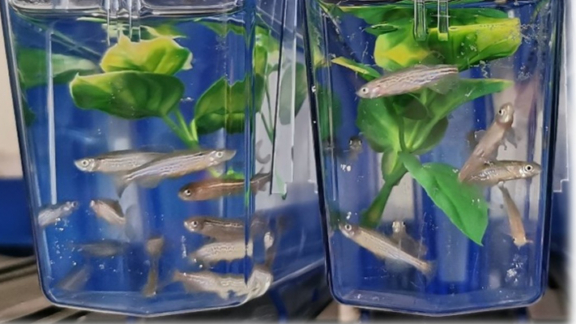
To analyze the consequences of telomere dysfunction in the whole organism, we have chosen to work with zebrafish, an organism with naturally shorter telomeres. Our goal is to use the knowledge acquired on the molecular nature of telomere protection to understand the consequences of its failure at the organism level. Our base hypothesis implies that telomere dysfunction signals a cascade of events that triggers cellular senescence and organism aging. We will test this idea by manipulating telomere dysfunction (in a time- and tissue-specific manner), using transgenic zebrafish. Our vision is that enabling timely telomere protection in a few key tissues will postpone aging in the whole organism and, as a consequence, reduce the frequency of age-associated diseases, in particular, cancer.
We have two main projects running in our lab. The first concerns the broader question of whether telomere defects are cell-autonomous or, alternatively, whether telomere dysfunction acquired in specific tissues somehow signals other organs, thereby coordinating organism aging. The second question relies on use of telomerase-mutant zebrafish to genetically determine the stage at which telomerase expression is required during cancer development, using an established model of invasive melanoma.

Projecto de Investigação

Chromosome rearrangements as basis for evolutionary adaptation and speciation

As consequence of telomere deprotection, chromosomes undergo breakage-fusion-bridge cycles resulting in gross chromosome rearrangements (GCRs). Even if most of these events are deleterious, several clones survive when telomere function is restored. GCRs comprise the chromosome instability observed in most human cancer. Similar to cancer cells, we propose that GCRs, when not lethal, may be adaptative and causative of reproductive isolation in speciation evolutionary processes. To test this hypothesis, we generated ten GCR-containing S. pombe strains (2 inversions and 8 translocations) using a pre-established Cre-loxP system. These GCRs constitute the sole difference from the parental wt strain. We show that for three specific translocations, chromosome structure is required for optimal growth. In contrast, the remaining GCRs are neutral in normal growth conditions. As expected, we observed reduced viability of offspring in hybrid crosses that varied from 10-40%. In collaboration with Isabel Gordo (Evolutionary Biology Laboratory, IGC), we have devised an experimental evolution experiment to test whether GCRs are capable of leading to further genetic isolation, if allowed to reproduce with the non-rearranged counterpart.

Publicações

(selected) Updated September (2010).

Carneiro T, Khair, L, Reis CC, Borges V, Moser B, Nakamura, TM and Ferreira MG (2010). Telomeres avoid chromosome-end detection by severing the checkpoint signal transduction pathway. Selected as a MUST READ paper by Faculty of 1000 Biology, Nature 467 (7312) :228-232 Link

Trindade S, Sousa A, Xavier KB, Dionisio F, Ferreira MG and Gordo I (2009). Positive Epistasis Drives the Acquisition of Multidrug Resistance. PLoS Genetics 5(7) Link

Rog O., Miller K.M., Ferreira, M. G. and Cooper J. P. (2009). Sumoylation of RecQ helicase controls the fate of dysfunctional telomeres Molecular Cell 33 :559-569 Link

Ferreira M.G. (2007). Telomeres on the Cdk roller-coster ride. Nature Cell Biology 9 :22-23 Link

Miller K.M., Ferreira, M.G. and Cooper, J.P.. (2005). Taz1, Rap1 and Rif1 act both inter-dependently and independently to maintain telomeres EMBO Journal 24 :3128-3135 Link

Ferreira, M.G., Miller K.M., Cooper, J.P. (2004). Indecent exposure: When telomeres become uncapped Molecular Cell 13 :7-18 Link

Ferreira, M.G. and Cooper, J.P. (2004). Two modes of DNA double strand break repair are reciprocally regulated through the fission yeast cell cycle Genes and Development 18 :2249-54 Link

Ferreira, M.G. and Cooper, J.P. (2001). The fission yeast Taz1 protein protects chromosomes from Ku-dependent end-to-end fusions Molecular Cell 7 :55-63 Link