Evolutionary Biology
Research Interests
In general, the area of research that I am interested is Evolutionary Biology.
I am interested in combining both theoretical and empirical work with the aim to a better understanding of the major forces that shape variation in natural populations.
I am using E. coli as a model organism to test theoretical predictions about the evolution of mutation rates and the genetics of adaptation.
Other topics of current work, which involve collaborations with other research groups at IGC, are: evolution in bacteria, generation of diversity in germinal centers, and antigenic diversity in parasites.

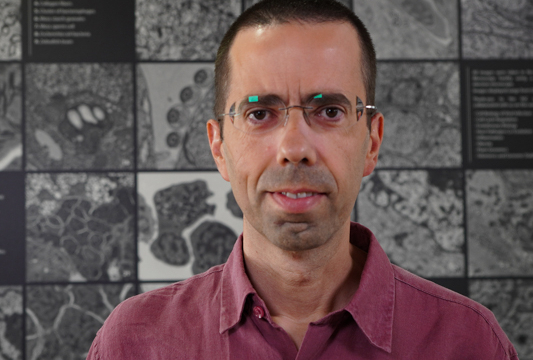
Isabel Gordo
Ph.D. in Evolutionary Biology
University of Edinburgh, Edinburgh
| Principal Investigator | |
|---|---|
| Phone | 21 440 7915 |
| Extension | 215 |
| Location (Wing) | Vasco da Gama (B1) - Room 1B |
| Website | |
Group Members
Research Project
Evolutionary genetics in Escherichia coli
All natural populations have to adapt to new environments. Knowledge of the genetics of adaptation should provide the centerpiece of a unified theory of evolution. Despite its extreme importance, the process of adaptation is far from being understood. For example: What is the rate at which positive Darwinian selection occurs? What is the distribution of fitness effects of mutations? Does adaptation involve the fixation of mutations with small or large effects? How do mutations interact? What are the relative costs and benefits in bacterial cells with high mutation rates? are some of the questions that we try to address.
Research Project
Rates of mutations in the protozoa Tetrahymena thermophila
The rate at which deleterious mutations arise in natural populations and their effects on fitness are amongst the most important parameters in evolutionary biology. For example, the value of the mutation rate to deleterious alleles is of key importance in theories of the evolution of sex and recombination, mating systems, mate choice, aging, sex chromosomes, diploidy, and in the explanation of the correlation between variability and recombination in several organisms. In this project we aim at estimating those parameters in the ciliate Tetrahymena thermophila, and to compare them with those from other model organisms. Tetrahymena displays unique features that make this organism an outstanding biological model to study evolution: at the molecular level a high set of ancestral eukaryotic functions; a rich and complex genome which is sequenced; asexual and sexual life cycles; somatic vs. germ-line and diploidy vs. polyploidy coexisting in the same cell/organism.
Research Project
Genetic Variation in Pathogen Populations
Genetic diversity of pathogen populations contains important information about their epidemiology and evolution. The understanding of this diversity is an important subject in evolutionary biology, ecology, epidemiology, population genetics and biomedical sciences. The standard neutral model of M. Kimura is far too simple for understanding pathogen genetic diversity.
In this project we study non standard neutral models that aim at being simple enough, but not too simple, so as to account for demographic processes likely to occur in natural pathogen populations.
Funding
POCTI/BSE/46856/2002
Population genetics of adaptation in Escherichia coli
PTDC/BIA-BDE/73163/2006
Rates of mutations in the protozoa Tetrahymena thermophila
PTDC/BIA-BDE/65276/2006
Diversity and molecular evolution of pathogen populations
Collaborators
Instituto Gulbenkian de Ciência, Oeiras, Portugal
We are collaborating with Dr. Lisete Fernandes, Dr. Francisco Dionisio, Dr. Gabriela Gomes and Dr. Helena Soares
Universidade Federal Rural de Pernambuco, Brazil
We are collaborating with Dr. Paulo Campos
Universidade California, Berkeley, USA
We are collaborating with Dr. Doris Bachtrog
Publications
Selected (updated July) (2009).
Trindade S, Sousa A, Xavier KB, Dionisio F, Ferreira MG and Gordo, I. (2009). Positive Epistasis Drives the Acquisition of Multidrug Resistance Plos Genetics (in press)
Gordo, I., Gomes M.G.M., Reis, D.G. and P.R.A. Campos (2009). Genetic diversity in The SIR model of pathogen evolution Plos One 4(3) :e4876
Gordo, I. and PRA Campos (2008). Sex and deleterious mutations Genetics (in press)
Perfeito, L, MI Pereira, PRA Campos and Gordo, I. (2008). The effect of spatial structure on adaptation in Escherichia coli Biol. Letters 4(1) :57-59
Perfeito L, L. Fernandes, C. Mota and Gordo, I. (2007). Adaptive Mutations in Bacteria: High Rate and Small Effects. Science 317(5839) :813-5
Gordo I. and PRA Campos (2007). Patterns of genetic variation in populations of infectious agents. BMC Evol Biol. 7(1) :116
Dionisio, F. and Gordo, I. (2006). The tragedy of the commons, the public goods dilemma and the significance of rivalry and excludability in Evolutionary Biology Evolution and Ecology Research 8 :321-332
Gordo, I. and Campos, P.R.A. (2006). Adaptive evolution in a spatially structured asexual population Genetica 127 :217-229
Dionisio, F., Conceição, I. C., Marques, A. C. R., Fernandes, L. and Gordo, I. (2005). The evolution of a conjugative plasmid and its ability to increase bacterial fitness Proc Roy. Soc London- Biology Letters 1 :250–252
Bachtrog D. and Gordo, I. (2004). Adaptation of asexual populations under Muller’s ratchet. Evolution (in press)
Gordo, I., Navarro, A.and Charlesworth, B. (2002). Muller's ratchet and the pattern of variation at a neutral locus. Genetics 161(2) :835-848
Gordo, I. and Charlesworth, B. (2001). Genetic linkage and molecular evolution. Current Biology 11(17) :R684-R686
Gordo, I. and Charlesworth, B. (2000). The degeneration of asexual haploid populations and the speed of Muller's ratchet. Genetics 154(3) :1379-1387