English | Português

Education Research Events Service Units Media & Public Support Us

Evolutionary Genetics

Research Interests

The main objective of the Evolutionary Genetics group is to study the genetics of adaptation using experimental evolution, by testing current evolutionary theory. Adaptation and the study of natural selection and its consequences are central to any understanding of biology because they provide a comprehensive framework for the origin, divergence and maintenance of diversity. We use experimental evolution to integrate the study of variation at the phenotype level with the study of variation at the genotype level.
Since setting up at the IGC, we have established experimental evolution populations of Caenorhabditis elegans, whose ecology is described by discrete non-overlapping generations at constant 104 census sizes, under benign resource conditions. These populations were manipulated to initially have levels of outcrossing and genetic diversity. Phenotyping is carried out at the level of fitness-proxies, life-history and RNA expression. Genome-wide linkage disequilibrium association mapping is carried out to determine the number and relative effects of the loci underlying adaptation. Numerical simulations are used to obtain the expected distributions of relevant statistics under the conditions of experimental evolution.
Our work with Drosophila melanogaster similarly addresses the genetic basis of adaptation by correlating the observed patterns of DNA sequence diversity with the phenotype distributions. In Drosophila we are particularly interested in understanding the process by which populations can revert to ancestral phenotype and genotype states, from standing genetic variation.
Prelimiminary conclusions from our work with both model systems are that evolution from standing genetic variation may involve the non-linear interaction among large genomic regions (10-50kb), encompassing several functional ORFs, through within generation negative frequency dependence among them. In C. elegans, we have been able to observe the evolution of male function, indicative of their role promoting adaptation to novel environments, through increased outcrossing rates. Inbreeding depression does not per se explain the maintenance of androdioecy in this organism. Future avenues of research include the explicit modelling of adaptation in the laboratory from the details of population genetics.

Informal inquiries about research or available positions in our group are welcomed and should be sent to Henrique Teotónio.

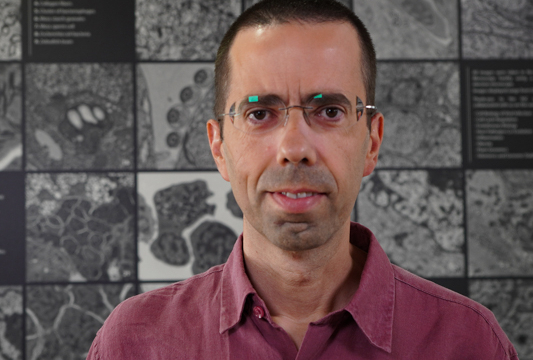
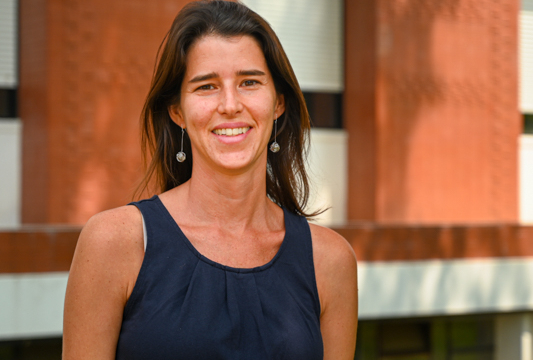
Henrique Teotónio

Ph.D. in Evolution

Universidade de Lisboa, Lisboa


Principal Investigator
Phone 21 446 4684
Extension 684
Email
Location (Wing) Vasco da Gama (B1) - Room 1B

Group Members

Ivo Chelo Postdoc
Tel: 21 446 4686
Sara Carvalho 2006 PDIGC PhD Student
Tel: 21 446 4685


Research Project

Experimental Reverse Evolution in Drosophila Melanogaster

The irreversibility of evolution is extreme form of evolutionary constraint. It is the impossibility of return to evolutionary states that were once possibl. Irreversibility can occur at several biological levels and the study of the genetic mechanisms underlying this process has had renewed theoretical interest and intense empirical efforts. We described the reverse evolution in phenotypic traits of several differentiated populations all descendent from a common ancestor when the ancestral environment was re-imposed upon them. It was found that despite the occurrence of adaptation to the ancestral environment reverse evolution is highly contingent on previous evolutionary history: the life-history dynamics between populations are dissimilar, some respond rapidly while other do not, some converge to ancestral phenotypic states while others do not. Neither exhaustion of genetic variability during previous differentiation nor the presence of gene interactions explain this contingency. The answer appears to lie in the diverse ways populations can evolve to the same level of ancestral fitness. Are these patterns of reversibility at the phenotypic level mirrored with genetic reversibility? How parallel are phenotypic and molecular trajectories during reverse evolution? These are the questions we are currently pursuing with studies of the population genetics at candidate genes.

Funding

Fundação para a Ciência e a Tecnologia (FCT) Project Grant, Portugal

Collaborators

University of California, Irvine, USA
Tony Long

University of Oregon, Eugene, USA
Patrick Phillips

Research Project

Evolution of Outcrossing in Caenorhabditis Elegans

Androdioecy is a rarely occurring mixed mating system where males co-exist with hermaphrodites in the same population. Why do males persist if selfing has many associated evolutionary benefits? Current research is addressing the hypothesis that males are evolutionary maintained due to their role in promoting outcrossing. Mating system theory is being directly tested by manipulating levels of outcrossing and mutational load while studying the adaptation of variable populations to novel environments. We hope to understand if the expression of deleterious mutations though inbreeding depression, the sorting of beneficial mutations through recombination, or their interaction are the primary factors responsible for the evolution of male function.

Collaborators

University of Oregon, Eugene, USA
Patrick Phillips

New York University, USA
Matt Rockman

University of California, Santa Barbara, USA
Steve Proulx

Publications

(Selected) Updated January (2009).

Teotónio, H, Chelo, IM, Bradic, M, Rose, MR and Long, AD. (2009). Experimental evolution reveals natural selection on standing genetic variation Nat Genetics

Manoel, D, Carvalho, S, Phillips, PC and Teotónio, H. (2007). Selection against males in Caenorhabditis elegans Proc. Royal Society B 274 :417-424

Teotónio, H, Manoel, D and Phillips, PC. (2006). Genetic variation for outcrossing among Caenorhabditis elegans isolates Evolution 60 :1300-5

Teotónio, H., M. Matos, and M.R. Rose (2002). Reverse evolution of fitness in Drosophila melanogaster J. Evol. Biol 15 :608-617 Link

Teotónio, H., and M.R. Rose (2001). Perspective: reverse evolution. Evolution 55 :653-660 Link

Teotónio, H., and M.R. Rose (2000). Variation in the reversibility of evolution Nature 408 :463-466 Link

Borash, D.J., H. Teotónio, M.R. Rose, and L.D. Mueller (2000). Density-dependent natural selection in Drosophila: correlations between feeding rate, developmental time and viability J. Evol. Biol 13 :181-187

Matos, M., A. Levy, C. Rego, H. Teotónio, and M.R. Rose (2000). The evolutionary no man's land between the wild and the lab TREE 15 :206