English | Português

Neoangiogenesis

Research Interests

We are interested in several aspects of vascular biology, namely the role and regulation of Vascular Endothelial Growth Factor (VEGF) and its receptors in normalcy and in disease. Our focused research areas are: 1) Endothelial cell biology and the molecular basis of endothelial differentiation; 2) VEGF/VEGF receptor in haematological tumors (leukemias); 3) the mechanisms of VEGF receptor signalling on endothelial and malignant cells; 4) the interaction between bone marrow vasculogenesis and hematopoietic differentiation.
General Introduction: The process of neo-vascularization (angiogenesis) is essential for the growth of solid tumors and formation of metastasis, while it may also determine the progression of haematological cancers such as leukaemia and lymphomas. The cellular mechanisms responsible for capillary extension, endothelial cell (EC) migration and formation of tumor blood vessels, have been characterized to some extent, with the resulting identification of numerous growth factor/receptor families. However, the molecular mechanisms whereby EC -originated in pre-existing blood vessels or from bone marrow derived endothelial precursors- incorporate and differentiate into functional vascular units are still largely unknown. Moreover, the signalling pathways activated by pro-angiogenic growth factors, and the importance of the cell structure in transmitting such signals, are still undefined. Finally, it is now well established that malignant cells share numerous markers with their endothelial counterparts, such as the expression of functional tyrosine kinase receptors, for instance. Whether tumor cells with endothelial features retain the ability to differentiate into vascular structures, and what are the molecular pathways involved in this process, is also unknown.

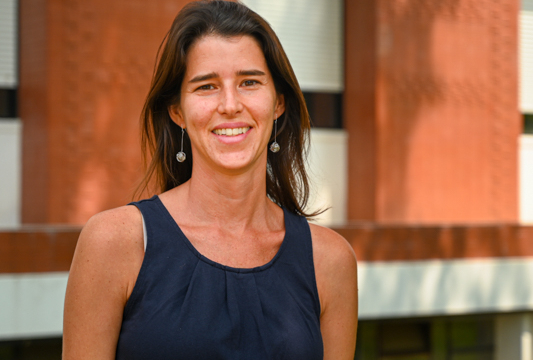
Sérgio Dias

Ph.D. in Tumor Immunology

University College London, London


Principal Investigator
Phone 21 722 9818
Extension 818
Email
Status External Group

Group Members

Ana Sofia Cachaço Postdoc
Tel: 21 722 9818
Tânia Barão Postdoc
Tel: 21 722 9818
Jacinta Serpa Postdoc
Tel: 21 722 9818
Ana Margarida Costa Postdoc
Tel: 21 722 9818
Ana Magalhães Postdoc
Tel: 21 440 7900
Leonor Remédio External Ph.D. Student
Tel: 21 722 9818
Germana Domingues External Ph.D. Student
Tel: 21 440 7900
Francisco Caiado External Ph.D. Student
Tel: 21 722 9818
Telma Carrilho External Masters Student
Tel: 21 440 7900
Inês Matias Trainee
Tel: 21 446 4659
Inês Martins Trainee
Tel: 21 446 4636


Research Project

Molecular mechanisms of endothelial differentiation.

In previous publications, we demonstrated the importance of bone marrow-derived endothelial precursors (EPC) in tumour angiogenesis and growth. However, the molecular pathways that regulate endothelial differentiation from vascular progenitors are vastly unknown. Therefore, one of the key projects in the laboratory deals with obtaining information as to how a circulating, non-adherent, CD34+AC133+ cell undergoes the process of differentiation into an adherent endothelial cell. We started of by showing molecular evidence for distinct phases of differentiation, each leading to the acquisition of a specific phenotypic property. This project will result in: a) the definition of an endothelial progenitor-specific gene expression profile; b) the identification of specific molecular changes that are crucial for the endothelial differentiation process; c) the importance of such mechanisms for normal vascular recovery/remodelling and in pathological (tumour) angiogenesis. For the normal in vivo vascular recovery, we use a bone marrow model, where mice are subjected to the effects of sub-lethal irradiation, resulting in bone marrow aplasis, followed by a recovery (usually 2 weeks after irradiation). We have hypothesized the recovery of normal bone marrow function requires de novo vasculogenesis, and subsequent proliferation and migration of the hematopoietic cells. We will use this model to verify and test some of the molecular pathways identified as crucial for endothelial differentiation. Finally, we are investigating the relative importance of EPC in different tumors (breast, lymphomas and prostate), and verifying the molecular regulation of endothelial differentiation throughout malignant processes.

Funding


Endothelial Progenitors in Lymphomas


Application of cDNA microarray technology in diagnosing and monitoring of Oncology Patients

Collaborators

Cornell University Medical College, USA
Shahin Rafii (Division of Hematology/Oncology)

MRC, Cambridge, UK
Tristan Rodriguez, Medical Research Council Clinical Science Center,

Research Project

Angiogenesis and angiogenesis growth factor pathways in haematological tumors (leukemias)

The broad aim in this project is to investigate the importance of angiogenesis for the growth of hematologic malignancies, such as during the progression of dormant to aggressive states. Also, to identify the molecular mechanisms whereby angiogenic growth factors, acting on tumour cells, promote resistance to conventional therapies (such as chemotherapy). We have thus far obtained important information as to how VEGF receptors (namely KDR) traffic and are regulated on leukaemia cells; recently, we revealed for the first time that malignant cells have internal and external autocrine loops involving VEGF and VEGFR-2. The different loops differ also in the activation of separate signalling pathways, resulting in the regulation (activation/blockade) of distinct cellular functions. This work will now be extended in more detail, and the cross-talk between VEGF receptors and the distinct signalling pathways activated within malignant cells will be dissected. The importance of these discoveries, and the ongoing work related to this project, is to contribute decisively towards the discovery of novel anti-angiogenic approaches for the treatment of acute leukemias. For this, we are also in the process of developing animal models of human leukaemia, to test the efficacy of anti-angiogenic approaches in the treatment of these malignancies. We have hypothesized, and are in the process of testing, that the relative angiogenesis dependence of leukemias differs according to the differentiation stage they are at (ie, not only the distinct cellular lineages, but also the stage of differentiation, influence the relative angiogenesis-dependence of different leukemias).

Funding


The tyrosine kinase c-Kit may identify subsets of human acute leukaemia


Metastasizing pathways in follicular and papillary thyroid cancers

POCTI/CBO 38391/2002
The role of VEGF and its receptors in angiogenesis and Tumor growth

Collaborators

ImCLone Systems Inc,NY, USA
Zhenping Zhu and Dan Lu.

IPOFG-CROL, S.A. Portugal
José Cabeçadas (Division of Pathology)

Leuven, Belgium
Peter Carmeliet

IPOFG-CROL, S.A. Portugal
Maria Gomes da Silva (Division of Hemato-Oncology)

Research Project

Endothelial cell biology: focus on VEGF receptor signalling pathways

The focus in this project is to to study the signalling pathways activated by angiogenic growth factors, namely the Vascular Endothelial Growth Factor (VEGF) family, and the importance of the cell structure (cytoskeleton) in this process. We are in the process of characterizing the cross-talk between the 2 main VEGF-A receptors, which appears to result in the movement of VEGFR-2 throughout the endothelial cell (accumulating in the nucleus). The mechanisms that regulate receptor turnover, activation and silencing, are some of the issues we are interested in resolving. This work will result also in the creation of a link between VEGF/VEGF receptor signalling and activation or repression of stress pathways on the endothelial cells.

Funding

POCTI/CBO 38391/2002
The role of VEGF and its receptors in angiogenesis and Tumor growth

Research Project

Mechanisms regulating VEGF production.

In this project, the broad aim is to to characterize the molecular pathways responsible for VEGF production by tumour cells, in response to changes in the tumor microenvironment. We will attempt at defining changes in cell metabolism, that identify a pre-angiogenic state -precede VEGF production- on tumour cells. This project will contribute towards the identification of angiogenic "zones" within different tumours, as markers of more invasive (metastatic) populations of tumor cells. Isolate (functionally) and test the metastatic potential of these tumour cell populations.

Funding


Metastasizing pathways in follicular and papillary thyroid cancers

Collaborators

Endocrinology Department, IPOFG-CROL, S.A.
Valeriano Leite

Pathology Department, IPOFG-CROL, S.A.
Ana Félix

Helsinki, Finland
Kari Alitalo

Publications

Dias, S.*, Choy, M.*, Alitalo, K. and Rafii, S. (2002). VEGF-C signaling through Flt-4 (VEGFR-3) Mediates Leukemic cell proliferation and survival. Blood 99 :2179-2184

Dias, S.*, Shmelkov ,V. S.*, Lam, G., and Rafii, S. (2002). VEGF promotes survival of leukemic cells by Hsp90-mediated induction of Bcl-2 expression. Blood 99(7) :2532-40

Heissig, B., Hattori, K., Dias, S. et al. (2002). Recruitment of Stem and Progenitor Cells from the bone marrow niche requires MMP-9 mediated release of kit-ligand. Cell 109(5) :625-37

Hattori, K., Heissig, B., Wu, Y., Dias, S., et al. (2002). Placental growth factor reconstitutes hematopoiesis by recruiting VEGFR1(+) stem cells from bone-marrow microenvironment. Nature Medicine 8(8) :841-49

Dias, S., Choy, M. and Rafii, S. (2001). The role of C-X-C chemokines in the regulation of tumor angiogenesis. Cancer Investigation 19(7) :732-738

Hattori, K., Dias, S., Heissig, B., Tateno, M., Witte, L., Yancopoulos, G. and Rafii, S. (2001). VEGF and Angiopoietin-1 stimulate post-natal hematopoiesis by recruitment of vasculogenic and hematopoietic stem cells. Journal of Experimental Medicine 193 :1005-1014

Dias, S., Hattori, K., Heissig, B., Zhu, Z., Wu, Y., Witte, L., Hicklin, D.J., Tateno, M., Bohlen, P., Moore, M.A., Rafii, S. (2001). Inhibition of both paracrine and autocrine VEGF/ VEGFR-2 signaling pathways is essential to induce long-term remission of xenotransplanted human leukemias. Proc Natl Acad Sci (PNAS) 98(19) :10857-62

Lyden, D., Hattori, K., Dias, S., Costa, C., et al. (2001). Impaired recruitment of bone-marrow-derived endothelial and hematopoietic precursor cells blocks tumor angiogenesis and growth. Nature Medicine 7(11): :1194-201

Roboz, G., Dias, S., Lam, G., Lane, W., Soignet, S.L., Warrel Jr, R.P. and Rafii, S. (2000). ArsenicTrioxide induces a dose and time-dependent apoptosis of endothelium and may exert an anti-leukemic effect via inhibition of angiogenesis. Blood 96(4) :1525-30

Dias, S., Hattori, K., Zhu, Z., Heissig, B., Choy, M., Lane, W., Wu, Y., Chadburn, A., Hyjeck, E., Gill, M., Hicklin, D.J., Witte, L., Moore, M.A.S. and Rafii, S. (2000). Autocrine stimulation of VEGFR-2 activates human leukemic cell growth and migration. Journal of Clinical Investigation 106 :511-521

Lane, W.*, Dias, S.*, Hattori, K., Choy, M., Rabbany, S., Wood, J., Moore, M. and Rafii, S. (2000). SDF-1 induced megakaryocyte migration and platelet production is dependent on matrix metalloproteinases Blood 96 :4152-4159