Plant Genomics
Research Interests
Our group is interested in the mechanisms underlying sexual reproduction and early embryogenesis with a particular focus on the role of the male gametes. Contrary to previous assumptions recent studies have shown that male gametes both in the plant and animal kingdom carry complex sets of RNA molecules, including not only mRNAs but also small RNAs. We are particularly interested in the role of these two RNA classes before, during and after double fertilization as it occurs in higher plants. Using Arabidopsis thaliana as our primary experimental model we are addressing specific questions like: (1) What are the functions of small RNA and DNA methylation pathways in sperm cells? (2) Do sperm cell derived RNAs play a role after fertilization? (3) Do conserved core sets of genetic modules underlie common characteristics of male gametes across kingdoms?
In a second research line we are analyzing the symbiotic transcriptome of the model legume Medicago truncatula, both for nodule and mycorrhizal symbiosis, leading to the creation of a gene expression database that will allow the in-depth analysis of the symbiontic genetic programme.
![]()
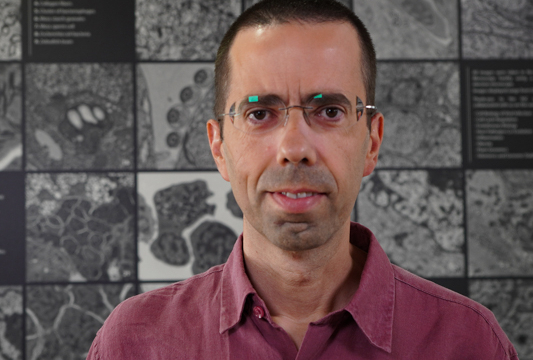
Jörg Becker
Ph.D. in Biology
University of Bielefeld, Germany
Group Members
Research Project
The role of sperm derived microRNAs during double fertilization in Arabidopsis
The world’s current food supplies rely almost exclusively on double fertilization as found in higher plants and characterized by the fusion of two male gametes (sperm cells) with two female gametes (egg cell and central cell), giving rise to the embryo and the endosperm. Thus a better molecular understanding of double fertilization will eventually provide the tools to improve crops. MicroRNAs (MiRs), as essential regulators in development processes and hormone responses, are likely to play a role in sexual reproduction. Our deep sequencing data of small RNAs from Arabidopsis sperm cells and pollen indicate that these express miRs belonging to dozens of microRNA families, with a number of them showing higher expression levels in sperm cells than in pollen. We are analyzing the role these sperm cell miRs might play for sperm cell viability and, if being delivered to the female gametes upon fertilization, for the regulation of early embryogenesis and endosperm development.
Funding
Fundação para a Ciência e a Tecnologia
(FCT) Research Grant (PTDC/AGR-GPL/103778/2008)
Collaborators
Rob Martienssen, Cold Spring Harbor Laboratory, Cold Spring Harbor, NY, USA
Keith Slotkin, Ohio State University, Columbus, OH, USA
Research Project
Identification of conserved germ cell specific modules as potential precursors of totipotency
Germ cell differentiation gave rise to all sexually reproducing organisms, but along their evolution, several species developed distinct spatial and temporal control over germline proliferation. The gametes are the end products of the germ cell lineage, and transfer ultimately to the zygote their unique totipotent potential, capable of giving rise to an entirely new organism. Despite the variety of mechanisms distinguishing germ cell differentiation and fertilization strategies in plants and animals, the molecular pathways towards totipotency are likely to remain conserved in form of a core set of genetic modules underlying the totipotent potential of the gametes. This project focuses on the identification of this conserved core set through the functional analysis of transcripts encoding ortholog gene products in male gametes of plant, human and fly.
Funding
Fundação para a Ciência e a Tecnologia
(FCT) Research Grant, Portugal
(PTDC/BIA-BCM/103787/2008)
Collaborators
Ji He, The Samuel Roberts Noble Foundation, Ardmore, Okla., USA
Carlos Plancha, Cemeare Lda, Lisbon, Portugal
Rui Martinho, Instituto Gulbenkian de Ciência, Oeiras, Portugal
Research Project
The symbiotic genetic programme of the model legume Medicago truncatula
Legumes (Leguminosae) are among the most important agricultural taxons on earth. Their unique feature is the ability to enter a nitrogen-fixing root nodule symbiosis with prokaryotes, resulting in the conversion of atmospheric nitrogen to ammonia that is subsequently supplied to the plant for incorporation into amino acids. As most of higher plants, legumes can also establish an arbuscular mycorrhiza (AM) symbiosis with fungi. In return for the supply with carbohydrates the fungus transfers minerals, and in particular phosphorus, from the soil to the plant. This project aims to provide a large-scale analysis of the symbiotic transcriptome of the model legume Medicago truncatula. Selected stages of nodule and mycorrhizal symbioses are being analyzed on Affymetrix Medicago truncatula GeneChip arrays and data will be made freely accessible in the Truncatulix database. The in depth analysis of the datasets obtained within this project is expected to foster the development of novel, testable hypotheses for diverse aspects of the genetic basis underlying the symbiotic programme of leguminous plants.
Funding
Fundação para a Ciência e a Tecnologia
(FCT) Research Grant, Portugal
(PTDC/AGR-GPL/70592/2006)
Collaborators
Helge Küster, Leibniz University Hanover, Germany
Helena Carvalho, Instituto de Biologia Molecular e Celular, Porto, Portugal
Leonilde Moreira, Instituto Superior Técnico, Lisbon, Portugal
Publications
(Selected) Update April (2009).
Slotkin RK, Vaughn M, Borges F, Tanurdžić M, Becker, JD, Feijó JA, Martienssen R. (2009). Epigenetic reprogramming and small RNA silencing of transposable elements in pollen Cell 136 :461–472
Borges F, Gomes G, Gardner R, Moreno N, McCormick S, Feijó JA, Becker, JD (2008). Comparative transcriptomics of Arabidopsis thaliana sperm cells Plant Physiology 148 :1168-1181
Johnston AJ , Meier P, Gheyselinck J, Federer M, Wuest AEJ, Schlagenhauf E, Becker, JD, Grossniklaus U. (2007). Genetic subtraction profiling identifies genes essential for Arabidopsis reproduction and reveals interaction between the female gametophyte and the maternal sporophyte Genome Biology 8 :R204
Becker, JD, Feijó JA. (2007). How many genes are needed to make a pollen tube? Lessons from transcriptomics Annals of Botany 100 :1117-1123
Marsch-Martinez N, Greco F, Becker, JD, Dixit S, Karaba A, Bergervoet J, de Folter S, Pereira A. (2006). BOLITA, an Arabidopsis AP2/ERF-like transcription factor that affects cell expansion and proliferation/differentiation pathways Plant Molecular Biology 62 :825-843
Sessa G, Carabelli M, Sassi M, Ciolfi A, Possenti M, Mittempergher F, Becker, JD, Morelli G, Ruberti I. (2005). A dynamic balance between gene activation and repression regulates the shade avoidance response in Arabidopsis Genes & Development 19 :2811-2815
Pina C, Pinto F, Feijó JA, Becker, JD. (2005). Gene family analysis of the Arabidopsis pollen transcriptome reveals biological implications for cell growth, division control and gene expression regulation Plant Physiology 138 :744-756
Feijó JA, Costa SS, Prado AM, Becker, JD, Certal AC. (2004). Signalling by tips Current Opinion in Plant Biology 7 :589-598
Becker, JD, Boavida LC, Carneiro J, Haury M, Feijó JA (2003). Transcriptional profiling of Arabidopsis tissues reveals the unique characteristics of the pollen transcriptome Plant Physiology 133 :713-725
Becker, J.D, Moreira LM, Kapp D, Frosch SC, Pühler A, Perlick AM (2001). The nodulin VfENOD18 is an ATP-binding protein in infected cells of Vicia faba L. nodules Plant Molecular Biology 47 :749-759