Press Release - 27-01-2012

European Research Council supports search for regulators of tissue damage
Instituto Gulbenkian de Ciência scientist receives €2.2M funding

There is more to fighting infection than just clearing the body of pathogens. As important as resisting infection, is limiting damage to the host’s tissue caused, very frequently, by toxins produced by pathogens or by components of the host immune response that clears those pathogens. Indeed, it is the damage inflicted to different tissues and organs that, if uncontrolled, can lead to the lethal outcome of some infectious diseases.

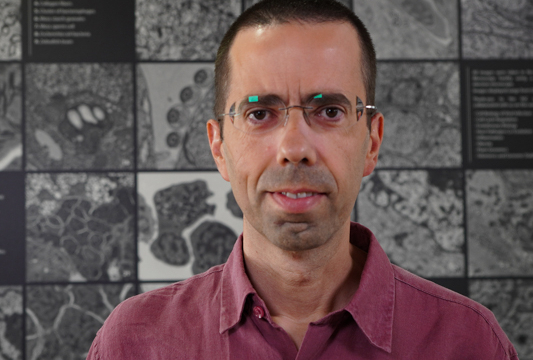
The in-built capacity that an infected individual has to limit the extent of tissue damage caused by different pathogens, a phenomenon known as ‘tolerance to infection’, has fascinated Miguel Soares, a group Leader at the IGC, for several years. Now, the European Research Council (ERC) has awarded his team an Advanced Grant of just over 2,2 million Euros, to investigate the mechanisms involved in this protective response. This line of research should identify and pave the way to the development of new therapeutic interventions, to quell the clinical outcome of various diseases.

Miguel Soares and his research team have already identified a restricted number of mechanisms, regulated by specific genetic programmes that control tissue damage in response to different types of infection. They have shown that these protective mechanisms are active for example against severe forms of malaria and severe sepsis. The researchers believe, however, that other protective mechanisms controlled by groups of so-called “protective genetic programmes” can act in a similar manner in the context of different diseases. Their aim is to identify these protective mechanisms, and describe how the genetic programs act, so that these may be targeted to treat a whole range of infectious diseases.

Says Miguel Soares, “Infectious diseases such as malaria and severe sepsis remain medical challenges today, acting as major killers across the globe. Our data suggest that one of the reasons for this is that current available therapy is directed almost exclusively at clearing the pathogens causing these diseases, with no regard to controlling tissue damage. Our research directly addresses the hypothesis that controlling tissue damage should also be considered as a crucial arm in fighting infectious diseases. We expect to identify therapeutic targets to obtain that effect”.

The ERC Advanced Grants are awarded to “exceptional”, established researchers, to “pursue ground-breaking, high-risk projects that open new directions in their respective research fields or other domains“, on the basis of scientific excellence alone, across three research domains. In the 2011 competition, 294 of 2284 applications are to be funded (corresponding to a success rate of 12%).

Of the 20 applications from scientists working in Portugal, two were selected: Miguel Soares’ team, in life sciences, and another in social sciences and humanities. This is only the second ERC Advanced Grant to be awarded to a senior life scientist working in Portugal, and both have gone to IGC researchers. Furthermore, of the 18 ERC grants awarded to scientists working in Portugal, across all research domains and all levels of funding (staring and advanced), seven have been awarded to IGC scientists.

European Research Council Press Release, list of selected researchers by country and statistics for the Advanced Grant Call 2011.


Miguel Soares holds a Ph.D. in Science (1995) from the University of Louvain, Belgium. He was a research fellow at Harvard Medical School (1995-1998), then Instructor in Surgery (1998-2003) and Lecturer (2003-2004) at Harvard Medical School, Boston, MA, USA. He moved to the Instituto Gulbenkian de Ciência, Portugal (2004), as a Principal Investigator. Miguel Soares is also an Invited Professor at the Lisbon Medical School, Universidade de Lisboa, Portugal. His group’ research interests are centered on defining the cellular and molecular mechanisms regulating inflammation and how these might be used therapeutically to overcome the pathological outcome of immune mediated inflammatory diseases. He has published over 90 scientific papers in international peer reviewed journals, holds several grants from the Fundação para a Ciência e Tecnologia, Portugal as well as international grants including one from the Bill and Melinda Gates Foundation, and has received several awards and prizes, namely the Roche Organ Transplantation Research Foundation (ROTRF) Recognition Prize (2011).

For further information, please contact Ana Godinho Tel. 21 440 7959

Close Window